Flat Roof Ponding and the Leaks It Causes
Standing water on a flat roof is not normal. Here is why ponding happens in Baytown, how it turns into leaks, and what it costs to fix in 2026.
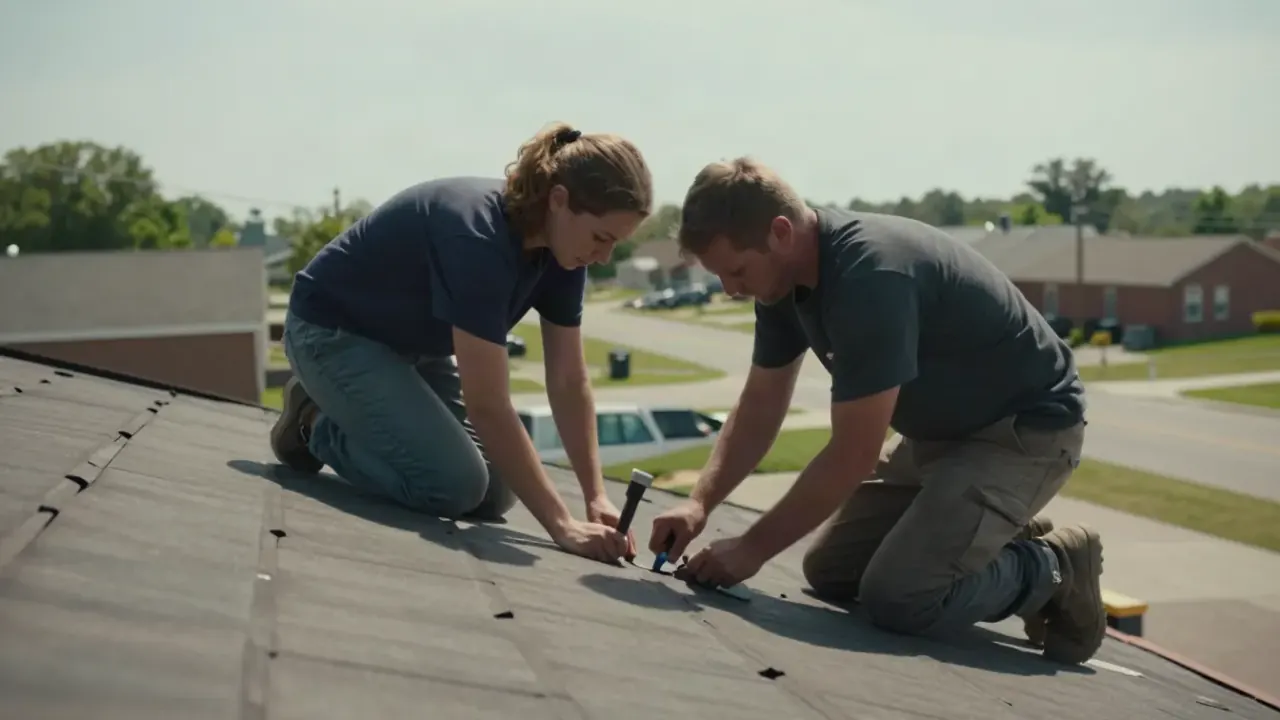
Flat roof ponding leaks happen because water that sits on a low-slope roof for more than 48 hours works its way through seams, fastener heads, and failed flashing until it drips into your ceiling. If you can see a puddle on your roof a full day after the rain stops, you already have the early stage of a leak problem, even if nothing is dripping inside yet.
Baytown gets roughly 58 inches of rain a year, and most of it arrives in heavy bursts off Galveston Bay. That is a lot of water to shed off a roof with a 1/4-inch-per-foot slope. Below, we walk through why your flat roof ponds, how that standing water turns into a leak, what it costs to fix in 2026, and how to keep it from coming back.
Why Flat Roofs Pond Water in Baytown
Flat roof ponding causes come down to three things: the roof was built with too little slope, the drainage path is blocked, or the deck itself has sagged since it was installed. A flat roof is not actually flat. Building code calls for a minimum quarter-inch of fall per foot of run, which is enough to move water to a drain or scupper in normal rain. When that slope is missing or lost, water has nowhere to go.
On the older commercial and carport-style roofs we see around Goose Creek Roof Leak Repair territory, the culprit is usually decades of heat cycling. Baytown summers push roof surface temperatures past 150°F, and that expansion and contraction slowly warps the deck. A roof that drained fine in 2005 can hold a half-inch of water today.
Debris is the other big one. Pine needles, live oak leaves, and the grit that blows off nearby industrial sites all collect around drains and scuppers. Once a drain clogs, water backs up across the whole field of the roof and finds the lowest point.
The four conditions that cause ponding
- Insufficient slope: less than 1/4 inch per foot of fall to the drain.
- Clogged drainage: leaves, grit, or a collapsed drain strainer.
- Deck deflection: the plywood or lightweight concrete has sagged between joists.
- Failed membrane: blisters, wrinkles, or open seams that trap water.
How Ponding Water Turns Into a Leak
Standing water does not need a hole to cause a leak. It creates one. The longer water sits on a flat roof, the more time it has to break down the membrane, and the more weight it puts on the structure underneath.
Here is the sequence we see on almost every flat roof leak repair job. First, the water pools in a low spot and starts working at the seams. TPO and modified bitumen are both vulnerable at the laps, where the adhesive or heat weld is the weakest point. Second, the water migrates sideways under the membrane through a process called lateral wicking. By the time you see a stain on your ceiling, the actual entry point can be 10 to 15 feet away from the drip.
Third, the water finds a fastener. Every screw or plate that holds the insulation board down is a potential path straight through the deck. A single ponded area the size of a dinner plate can sit over a dozen fasteners.
Weight matters too. One inch of standing water weighs about 5.2 pounds per square foot. A 20-by-30-foot ponded section holds more than 3,100 pounds of water pressing down on your roof structure. That is how small ponding problems turn into sagging decks and interior ceiling damage.
How to Fix Flat Roof Ponding in Texas
Fixing flat roof ponding in Texas starts with finding the low spots and the water path, not with patching the ceiling stain. We start every job by mapping the roof with a level and a hose test, then we decide whether the fix is drainage, slope, or membrane.
For most residential flat and low-slope roofs in Baytown, the repair falls into one of three categories:
- Drainage correction. Clear the drains, replace collapsed strainers, and add or enlarge scuppers so water exits the roof faster.
- Slope correction. Add tapered insulation board or a lightweight concrete overlay to build the missing fall back into the roof.
- Membrane repair or replacement. Cut out the failed section, install new membrane, and heat-weld or adhere the seams properly.
If the ponding has already caused interior damage, we handle the investigation side too. Our ceiling leak detection in Baytown, Texas service traces the stain back to the actual entry point on the roof so we are not guessing. For roofs that are structurally sound but losing their surface, a roof coating application in Baytown, Texas can restore the waterproof layer and buy years before a full replacement.
For roofs with chronic ponding and repeated leaks, the honest answer is often a full flat roof replacement with proper slope built in. We tell you that up front rather than selling you a patch that fails again in 18 months.
How to Prevent Flat Roof Ponding
How to prevent flat roof ponding comes down to keeping water moving and catching small problems before they become structural. You do not need to be a roofer to do most of it.
Twice a year, in spring and again in late fall, get on the roof or have someone get on it for you. Clear every drain, scupper, and gutter. Look for any spot where water has left a ring stain, because that ring marks a low point even when the roof is dry. Check the seams around vents, pipes, and the edges where the membrane turns up.
Flat roof maintenance in Baytown also means paying attention to what the storms leave behind. After a named storm or a heavy squall line, walk the roof and look for lifted membrane, missing fasteners, or new debris blocking the drains. Catching a lifted seam early is a $300 repair. Catching it after it has been ponding for a season is a $4,000 deck repair.
If your building has interior ceiling tiles, watch them. A slight sag or a faint brown ring is the earliest sign that ponding water has already found a way in.
Common Mistakes We See on Baytown Flat Roofs
The most common mistake is treating ponding as normal. It is not. A flat roof that holds water for more than 48 hours after rain has a drainage defect, full stop, and it will leak eventually.
The second mistake is patching the ceiling instead of the roof. We get called out to homes where the homeowner has painted over the same water stain three times. The stain keeps coming back because the roof entry point was never touched.
Third, people use the wrong sealant. Hardware-store roof cement is not rated for a flat roof that sees 150°F surface temperatures. It cracks within a season and can actually trap water against the membrane, making the ponding worse.
Fourth, they add weight without adding drainage. Sandbags, planters, and HVAC pads placed on a flat roof without adjusting the slope create new low spots. Every pound you put on a flat roof changes where the water goes.
Finally, they wait. Ponding leaks rarely announce themselves dramatically. They start as a stain, then a drip, then a wet insulation board, then a sagging ceiling. By the time water is running down a wall, you are looking at drywall, insulation, and possibly framing repairs on top of the roof work.
When to Call a Professional
Call a professional when the ponding lasts more than two days, when you can see sagging or soft spots on the roof deck, or when water has already reached the interior. Those three signs mean the problem is structural, not cosmetic.
You should also call if you cannot safely get on the roof, if the ponding area is larger than a few square feet, or if you have already patched the same spot twice and it keeps leaking. At that point, the leak is almost certainly coming from somewhere else on the roof, and you need flat roof leak detection to find it.
Our team at Baytown Roof Leak Repair handles flat and low-slope roofs across the Baytown area every week. We find the leak, fix it, and test the repair with water before we leave. If you want a team that has seen every version of this problem on Gulf Coast roofs, we are the ones to call.
What Flat Roof Leak Repair Costs in Baytown TX
Typical 2026 pricing for flat roof leak repair in Baytown runs from $350 to $900 for a straightforward leak repair, $1,200 to $3,500 for slope correction with tapered insulation, and $6,500 to $14,000 for a full flat roof replacement on a typical residential or small commercial building.
What drives the number is access, square footage, and how much of the deck is wet. A leak at a drain ring is a quick fix. A leak that has been ponding for two years and rotted out a 10-by-12 section of deck is a different job entirely.
We give you a flat price before we start. No hourly surprises, no change orders halfway through. If we open up a section and find more damage than expected, we stop and show you before we continue.
If you are comparing quotes, ask each contractor three things: how they will test the repair, whether they will correct the slope or just patch the membrane, and what warranty covers the work. A patch with no slope correction will pond again.
Frequently Asked Questions
Why does my flat roof pond water?
Your flat roof ponds because the slope has fallen below the 1/4-inch-per-foot minimum, the drain or scupper is clogged, or the deck has sagged. Baytown's heavy rain and 150°F summer surface temperatures accelerate all three. If water is still standing 48 hours after rain, the drainage is defective.
How do I fix flat roof ponding leaks?
Fix the drainage first, then the slope, then the membrane. Clear the drains, add or enlarge scuppers, build slope back with tapered insulation, and repair or replace the failed membrane section. Patching the membrane without correcting the drainage means the ponding returns with the next storm.
How much does flat roof leak repair cost in Baytown TX?
In 2026, most flat roof leak repairs in Baytown run $350 to $900. Slope correction with tapered insulation runs $1,200 to $3,500, and a full flat roof replacement runs $6,500 to $14,000 depending on size and deck condition. We quote a flat price before work begins.
Can I just patch a ponding leak myself?
You can patch a small, isolated leak, but ponding leaks almost never come from the spot where the water drips inside. Water travels sideways under the membrane, so the entry point is often 10 to 15 feet from the ceiling stain. A DIY patch usually misses it.
How often should a flat roof be inspected in Baytown?
Twice a year at minimum, plus once after any named storm. Clear drains and scuppers at each inspection, and check seams, flashing, and any spot where water has left a ring stain. Catching a lifted seam early is a few hundred dollars instead of a few thousand.
Get Help With Roof Leak Repair in Baytown
If your flat roof is holding water or you already have a stain spreading on the ceiling, we can find the source and stop it. We serve Baytown and the surrounding communities with flat and low-slope roof leak repair, and we test every repair with water before we pack up.
Call Baytown Roof Leak Repair at (281) 306-5579 and we will get a technician out to look at your roof.